
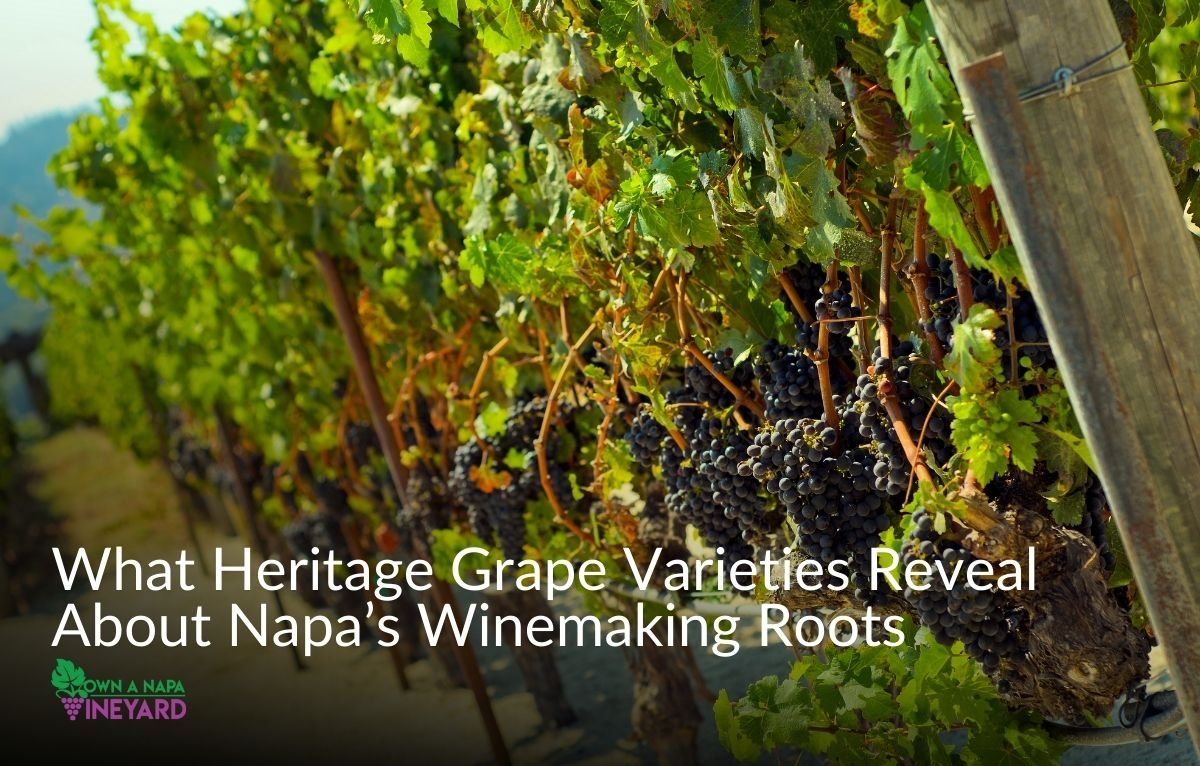
Napa Valley is known around the world for its Cabernet Sauvignon, Chardonnay, and bold red blends. But before those names dominated shelves, other grape varieties laid the foundation for what the region is today. These are the heritage grape varieties in Napa, vines that were planted in the 19th and early 20th centuries, long before Napa gained global attention.
Many of these grapes came from Europe and were planted by early settlers who brought their agricultural knowledge with them. They selected grapes that could adapt to Napa’s soil and climate, experimenting with everything from Zinfandel to Petite Sirah, Carignan, and even lesser-known varieties like Charbono and Mission.
While some of these grapes have been replaced by more commercially popular ones, a few still remain. Their survival tells the story of Napa’s agricultural roots and the persistence of growers who value tradition as much as innovation.
What Counts as a Heritage Variety?
There’s no universal list of what qualifies as a heritage grape, but in Napa, it usually refers to varieties that were widely planted before Prohibition or have been cultivated in the region for multiple generations. These grapes are tied to early vineyard development and often appear in older, dry-farmed blocks that have been maintained over decades.
Some of the most recognized heritage grape varieties in Napa include:
- Zinfandel – One of California’s earliest success stories, still grown in select old vine plots
- Petite Sirah – Known for its deep color and structure, historically used in blends
- Charbono – Rare, with less than 100 acres planted statewide, but still found in a few Napa sites
- Carignan – Once common in field blends, now mostly used by producers reviving historic styles
- Mission (or País) – Originally planted by Spanish missionaries, rarely seen today but historically significant
Why Some Growers Still Work With Heritage Grapes
Despite their lower visibility, some producers continue to grow and bottle heritage grape varieties in Napa. The reasons vary. For some, it’s about preserving vines that have been in their family for generations. For others, it’s the challenge of working with older vines or grapes that require more attention but offer distinct results.
There’s also growing interest from consumers who want wines with a story. A bottle of old-vine Zinfandel or Charbono doesn’t just taste different—it comes from a block of vines that may be 50, 75, or even 100 years old. That adds meaning and historical context for many buyers.
Heritage grapes are often grown in smaller quantities, which limits availability but also supports small-production wines that reflect local tradition. These wines may not have the name recognition of a premium Cabernet, but they hold cultural value and offer an experience rooted in place.
When Heritage Grapes Make Sense for Today’s Wine Drinkers
Modern wine preferences lean toward bold reds and clean, crisp whites. Still, there’s room for heritage varieties in Napa for people who want something distinctive. These wines often show more rustic structure, higher acidity, or earthier tones. They pair well with food and offer a different take on Napa’s winemaking landscape.
For those who enjoy trying lesser-known varietals or want to explore a deeper connection to a wine region, heritage grapes offer that opportunity. And because they’re often made in small batches, the experience feels more personal and limited.
Heritage wines also appeal to those who value sustainability. Many of the vineyards growing these grapes are older, dry-farmed, or maintained using traditional practices. That matters to drinkers who care about how the land is treated over time.
Comparing Heritage Grapes to Today’s Popular Varieties
It’s easy to assume that older grape types are somehow less complex or refined. In practice, they’re just different. Many of Napa’s top-selling wines today come from vines planted after the 1960s, when the region’s modern growth began. But heritage grapes continue to show that age, when matched with care, still produces balanced and expressive wines.
- Flavor and Structure
Wines from heritage grape varieties in Napa often display more tannin, spice, or acidity than modern blends. They tend to be food-friendly and less fruit-forward. - Winemaking Approach
Smaller producers working with these grapes often use minimal intervention techniques. This lets the grape and site speak for itself, rather than relying on heavy oak or lab-based adjustments.
Where to Find Heritage Grape Wines in Napa
They’re not always easy to spot. Many heritage wines come from limited-production labels or single-vineyard bottlings. Some may be labeled under broader AVAs or blended with more popular varieties. If you’re visiting Napa or buying direct from producers, ask about old vine Zinfandel, field blends, or any blocks planted before the 1960s.
Tasting rooms that specialize in historic or experimental winemaking are good places to start. So are winemakers focused on dry-farming, organic vineyards, or hands-off production methods. These are often the people most likely to be working with heritage grape varieties.
Why Heritage Grapes Still Matter
Choosing to explore heritage grape varieties in Napa is about understanding the full story of the region. It’s not just about what sells now, but what helped shape Napa’s wine reputation in the first place. These grapes continue to offer something real and lasting, even if they aren’t always front and center.
If you’re curious about trying wines that come from older vines or want help finding producers that still work with these heritage grapes, Own A Napa Vineyard can help. They can connect you with vineyards that match your taste and your interest in wines that reflect history, place, and real people behind the bottle.